When temperatures plunge, winds rise, and snow begins to fall during a southern Manitoba winter, many motorists turn to Manitoba 511 for up-to-date road conditions before heading out — or deciding to stay home.
It’s a resource that helps keep the region informed and safe, but what goes into maintaining it? And where does the information come from?
According to Derek Trainer, manager of the 511 Operations Centre and the overseer of the Manitoba 511 website, an entire network of sources comes together to keep Manitobans in the loop.
Information from the frontlines
Although the 511 service, which is free to use and accessible by phone or web browser without an account, spans North America across many provinces in Canada and states in the U.S.A., the information it uses to keep the public informed is gathered locally.
Trainer said that updates in Manitoba primarily come from MTI (Manitoba Transportation and Infrastructure) maintenance staff, who report on the highways daily.
“They all have their area they look after, and so they patrol their area and then call in their road conditions,” he said.

Trainer said the maintenance workers provide specific information, including whether the road is partly or entirely covered by snow, the amount of visibility, and any secondary conditions, such as blowing snow increasing over the day.
He added that information also comes in from the RCMP, Brandon Police, Winnipeg Police, and other emergency services such as fire and ambulance.
An early start
The operations manager said the daily road report process begins early, with maintenance workers assessing conditions as their first task of the morning to ensure accurate information reaches Manitobans before the day begins.
“[After the reporting], they start dealing with whatever needs to be dealt with in terms of maintenance on the highways,” he said.
When it comes to the decision to close highways, Trainer said that the RCMP makes the call.
“They assess the conditions of the road and determine [if it’s not] safe and … communicate with our 511 operations centre, and then that information is posted on the 511 site,” he said.
“Then we obviously keep it up until the determination is made that, ‘Okay, your conditions are improved, and it is now safe to reopen the road.’”
Weather conditions change quickly
Trainer added that while MTI “does its best to provide the latest road conditions,” conditions can change quickly, and Manitoba 511 encourages motorists to drive with caution regardless of what is reported.
He added that a further reason to check the site or call 511 before each trip is that sometimes the conditions in town don’t reflect what is happening outside it.
“What I see inside the city and what I see outside the city can obviously be two very different situations, so I’d always encourage the public to visit 511 before choosing to travel, especially if they know there is weather forecasted,” he said.
A place to check road closures
511 is also a reliable source of keeping tabs on road closures, which are relevant to Manitobans for a few reasons — both for safety and because motorists caught on closed roads could face fines or a loss of insurance.
On this topic, Trainer said that 511 is especially useful because even when conditions appear to have cleared, road closures may still be in effect.
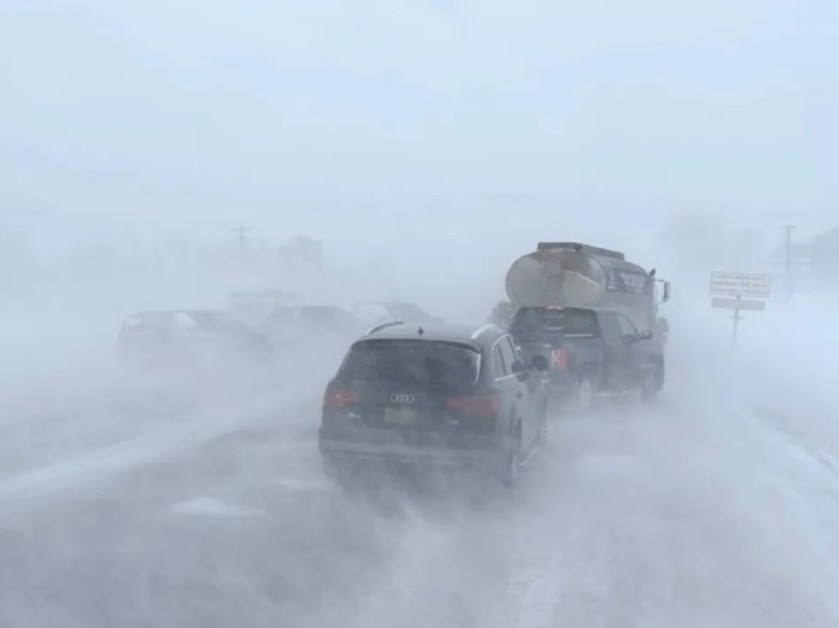
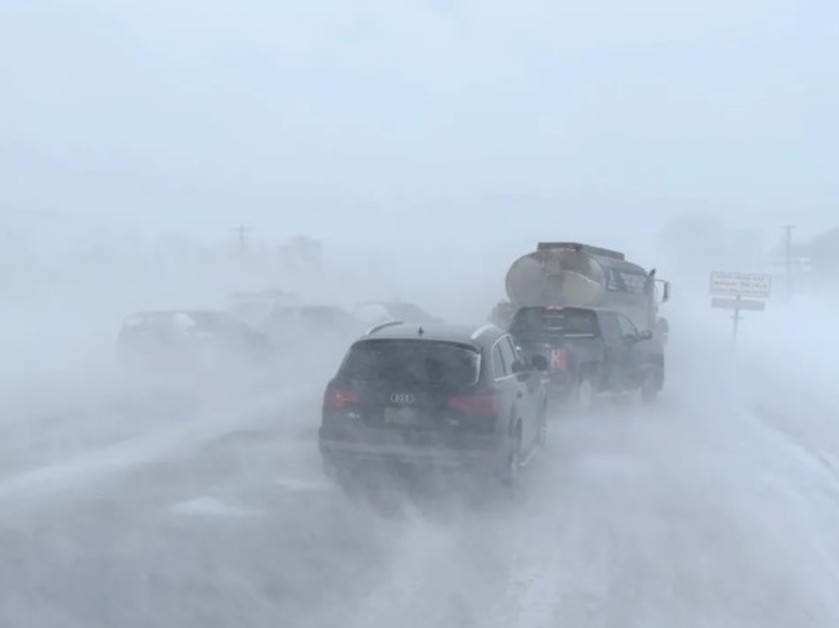
He said this recently happened when Highway 75 was closed during a particularly eventful winter storm that left vehicles stranded in the snow along the route.
“The 511 site was able to kind of show that even though … conditions had improved, that highway was still closed because our crew still needed the time to basically clear the lane so that traffic could get through with all the … vehicles that had been stuck.”
Although it took time to clear the stretch, as soon as it was open, 511 reflected the update.
New features to stay connected
As Manitoba 511 develops, it has added new features to connect people in the province with road information in new ways, including message boards for specific highways, such as Highway 75.
“When highways close, that information is communicated [on] 511, but now we have the ability to also use those message boards to communicate that information to the public,” he said, adding that the Track my Plow feature, launched in 2025, also helps.
“It shows the locations of the plows, and it will also show that plow’s previous route up to the past two hours.”
Manitoba 511 also has traffic cameras in various locations that can provide a “visual snapshot” of conditions in specific areas.
Trainer said the service is always open to new ways to help Manitobans stay informed about road conditions and regularly monitors features used in other provinces that might be able to benefit Manitoba.
The operations manager, who began working with 511 in 2008 and has witnessed its development, said improving public access to information that affects daily life has long been a priority of the service.
The legacy of 511
Manitoba 511 has existed in its current iteration for 20 years.
The service has operated as it does now since the CRTC (Canadian Radio-television and Telecommunications Commission) assigned Canada 511 for “weather and traveller information exclusively” in 2006.
Trainer added that the transition from Manitoba’s previous road and traveller information page was completed in 2011.
Today, the new resource includes all the information from its predecessor, with the additions of a mobile map, browser and phone access, and the features Trainer mentioned above.
While winter road conditions are an important part of 511 (especially during unpredictable and severe weather events), the resource provides year-round road condition information, including construction project updates and road hazard warnings such as flooding or forest fires.
Click here to visit Manitoba 511.
With files from Robyn Wiebe