
Manitobans requiring brain surgery now have a less invasive option.
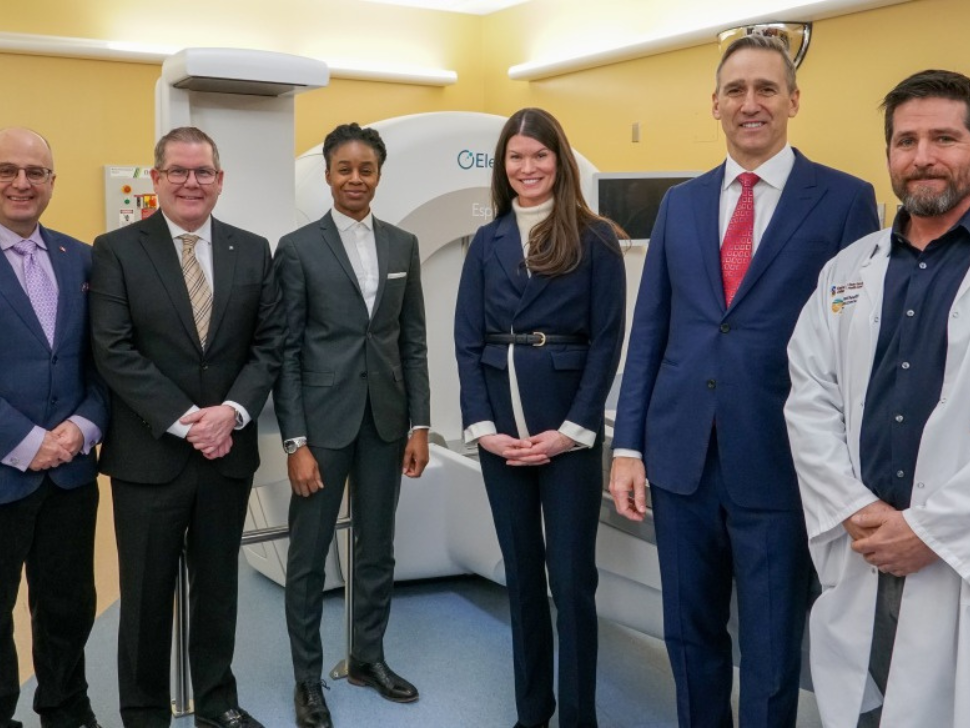
On Monday, the Health Sciences Centre, the HSC Foundation, and the province unveiled a new Gamma Knife unit for stereotactic brain surgery.
A Gamma Knife is a high-precision device used to treat brain tumours, vascular malformations, and other brain disorders with targeted doses of gamma radiation, eliminating the need for incisions and open surgery for many patients.
“This is a public investment that improves outcomes and experiences for people facing some of the most difficult moments of their lives and ensures they can access high-quality care close to home, right here in Manitoba,” said Uzoma Asagwara, Minister of Health, Seniors and Long-Term Care. “This new technology means more Manitobans can receive advanced brain treatment within the public health system, without the trauma of open surgery. For patients and families, that can mean less pain, shorter recovery times, and fewer disruptions to their lives.”
This new unit was purchased with help from the HSC Foundation’s Operation Excellence campaign and through the generosity of donors.
In 2003, Manitoba became the first hospital in Canada to acquire a Gamma Knife system. This new unit, the Elekta Esprit, offers key improvements, including integrated CT imaging that eliminates the need for same-day MRIs and provides greater flexibility in MRI scheduling across the hospital. It can also treat larger tumours, and patients will now have a new option of a custom-fitted mask to stabilize head position during Gamma Knife radiation delivery.
“This investment is critical for Manitobans requiring brain surgery,” said Jonathon Lyon, President and CEO, HSC Foundation. “Each year, more than 230 patients, over 25% of those needing brain surgery at HSC, are treated with the Gamma Knife.
Dr. Anthony Kaufmann, an HSC neurosurgeon, says these advancements are significant because they allow doctors to be far more flexible in scheduling MRIs, benefiting all HSC patients.
“The new unit also shortens the patient’s time commitment on treatment day. In some cases, a patient can be fitted with a mask, have their tumour treated, and return home in as little as two to three hours,” said Dr. Kaufmann.
The HSC Foundation’s Operation Excellence campaign is a multi-year initiative aimed at advancing health care in Manitoba by establishing a surgical centre of excellence and innovation.